
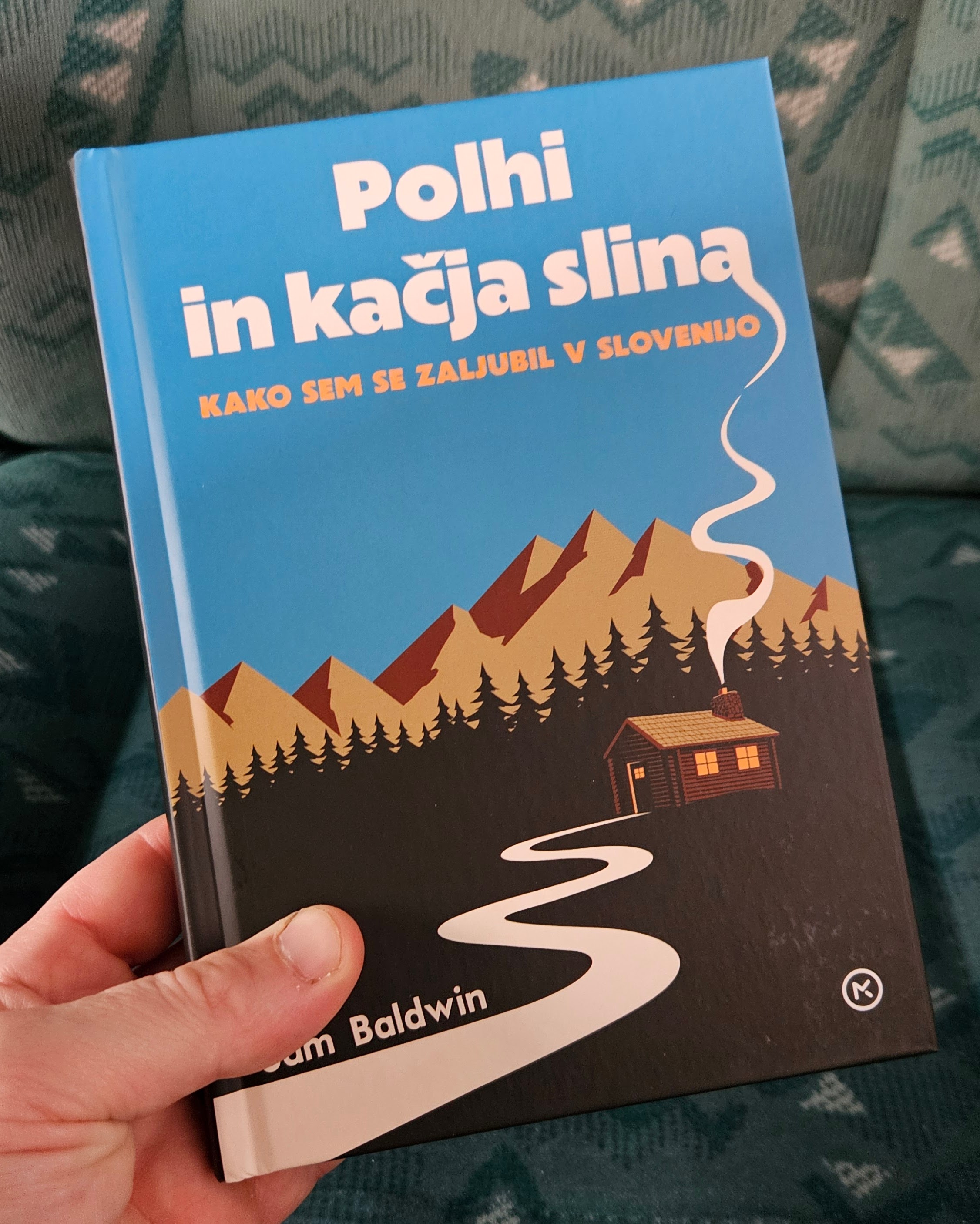
I’m delighted to announce that my book about life in Slovenia – Dormice & Moonshine: Falling for Slovenia – released in English in 2024, has now been translated and published in Slovenia by Mladinska knjiga, the country’s leading publisher.
With some 50 book stores throughout the country, I’m happy that MK deemed the book something Slovenes would be interested in. It’s an affirmation that my experiences, views and writing itself have been approved by Slovenes, in a country which already has a lot of love for its wordsmiths.
During my time in the country, I was often met with surprise when I told Slovenes I had moved there from the UK. Slovenes have a great deal of curiosity about how other nations view their own, especially nations that Slovenes consider ‘good’ (typically ‘The West’).
Translated as Polhi in kačja slina – Dormice and snake saliva – (snake saliva being a slang term for schnapps) the book went on sale this month, and there’ll be some media events soon following.
Why Slovenia’s book industry is unusual
As I mention in the book itself, Slovenia occupies a rather unique spot in the book publishing world. Firstly, because the language is spoken by just 2 million people, the market is small. Selling just a few hundred copies can make a title a bestseller.
Slovenian books are incredibly expensive
I was shocked when I first saw the prices of books in Slovenia. Compared to my native UK, the prices were very high. It is understandable for books written in Slovene, due to the small market. But even books written in English have high cover prices. Indeed, the most expensive book I have ever bought in my life was a biography about Marshall Tito, which set me back some €60. In general, new hardbacks tend to cost €30 plus: paperbacks at least €20.
Slovenes don’t use Amazon (much)
There is no Amazon.si. And even though you can order via Amazon.de or Amazon.it, the shipping costs tend to make it unattractive to those living in Slovenia. So Slovenian book sellers are not subject to competition from Bezos’ mighty online store. This is likely another factor that helps keep book prices high: small market, no competition.
Slovenians love books
Perhaps most surprising of all, considering the high price of books in Slovenia, is that Slovenians love books. Indeed, Slovenian heroes from history wielded the pen, not the sword. Playwrights, poets and novelists are the country’s best-loved characters. I have never seen so many bookshops as I have in Slovenia, and books are perhaps revered more highly than in many countries.
This may be related to preserving Slovenian as a language, which is admirable. Despite numerous hostile takeovers by neighbouring powers, and efforts to suppress or eliminate the language, it has survived. (Though I must confess, during the grammar sections of Slovene class, I often wished it hadn’t).
Polhi in kačja slina is available in Mladinska knjiga shops across Slovenia, and if your Slovenian is not quite at that level, you can of course read the English version, Dormice & Moonshine, available from any Amazon site, as a paperback, ebook or hardback.

 Slovenia: Life in the SLO Lane
Thats amazing! Congrats and I wish you good sales! I had already read the book in English, so I’ll probably pass, but I wholeheartedly recommend it to everyone else.
Who translanslated the book and how did that process go? I’m sure there’s an interesting backstory there 🙂
Dude… I read this book before and during my first ever trip to Slovenia… Great read. Loved every page and fuelled my now fascination with the place…
Congratulations! I confess I put my Eng copy aside ages ago when I got a large job to do or some tepid reason like that, so your news has spurred me to get back into it, as I was enjoying it. You must be chuffed. Well done.
Sim
Čestitke. You can tell a lot about a country from its cultural habits. Reading sharpens intelligence. Shutting shops on Sundays coheres family. Complaining allays complacency. Where else has a public holiday for their national poet? The UK can’t muster such respect even for Shakespeare.
Nick
I bought your book yesterday as we just traced my husband’s family back to Skofja Loka. I’m already hooked!
Thanks for letting me know! Good luck with the exploring your family history. If you are still enjoying the book by the end – please do add a short review/rating to Amazon or Goodreads.